

All-on-4 dental implants are used for patients who have lost multiple teeth. They enable patients to have a full set of teeth with just four implants. When applied correctly to the right patient, All-on-4 yields highly successful results (95%). As with all dental treatments, it should be remembered that there are certain risks associated with All-on-4.
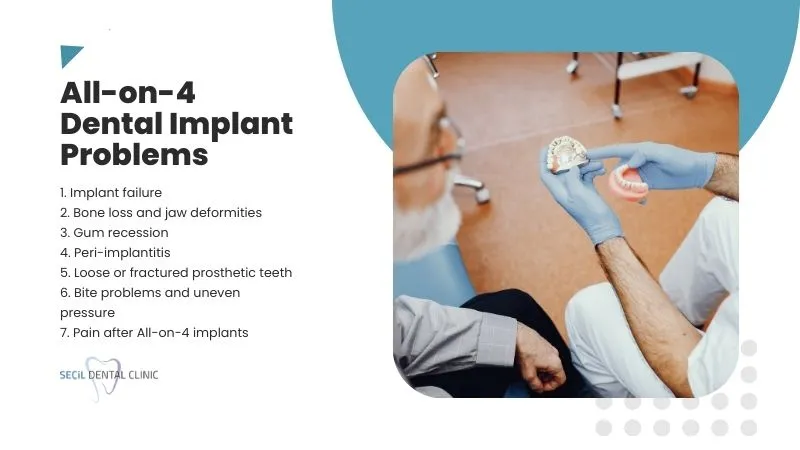
Problems may arise from careless treatment, insufficient analysis of the patient's bone and occlusion structure, or neglecting long-term care, or they may stem from the patient's bone and jaw structure. Being aware of potential problems does not mean that the treatment will fail; it enables the patient to make an informed decision and ensure good care.
Implant failure means that the implant does not fuse properly with the jawbone and is not accepted by the body. During the osseointegration process, the implant is expected to integrate with the jaw. This stage is even more important in All-on-4 treatment because four implants support the entire dental arch.
Several factors contribute to failure in All-on-4 dental implants. These include poor bone quality, excessive loading on the implants during the healing period, smoking, or systemic diseases that negatively affect bone healing.
All-on-4 implant procedure requires the front implants to be placed vertically and the rear implants at an angle. This reduces the need for bone grafting. Strategically planning the position of the implants ensures that chewing forces are distributed evenly. If they are not distributed evenly, certain areas of the jaw may be subjected to excessive stress, leading to bone loss around implants. This is not an immediate problem; it is a risk that develops over time, depending on the quality of planning and the design of the closure.
Healthy gum tissue is important for both dental health and aesthetics. In All-on-4 restorations, gum recession occurs when the prosthesis puts too much pressure on the gums or when the area around the implant is not cleaned properly. When the gums recede, the implant between the prosthesis and the gums becomes visible. This makes plaque control difficult and negatively affects appearance. Regular dental cleaning and treatment of existing gum disease keep All-on-4 dental implants safe.
Over time, plaque builds up in the areas where All-on-4 prostheses meet the gums. This plaque causes infection around the implant (peri-implantitis). Peri-implantitis progresses slowly and may not be noticeable in its early stages. Do not worry, protecting yourself from this infection is simple: dental cleaning and care. All-on-4 prostheses must be cleaned to prevent plaque build-up underneath them. Water flossers or dental floss can be used for this purpose. All-on-4 implants remain safe when teeth are brushed regularly every day and dental floss is used. Patients who want more detailed cleaning and care can visit their dentist once a year for deep cleaning. Additionally, they can have their prostheses polished to keep them looking shiny and new.
Mechanical problems can sometimes develop in the bridge of all-on-four prostheses. Prostheses may become loose in patients who grind their teeth or apply strong chewing forces. This mechanical problem is easily repaired. Frequently encountering this problem indicates that the closing forces are not evenly distributed.
An improperly adjusted bite is one of the late complications. When chewing force is concentrated on certain implants, both the bone and the prosthetic components are strained. Patients describe this situation as a feeling of pressure, jaw fatigue or discomfort. It is essential that the bite is properly adjusted and that the patient reports any discomfort immediately after the prosthesis is fitted. After All on 4 prostheses are fitted, the dentist asks patients about their comfort level. At this stage, the patient should feel free to share any concerns they may have. If there is discomfort, the dentist will make the necessary adjustments.
Mild pain and sensitivity during the healing process are normal, but this pain should subside and disappear within a week. Prolonged pain and discomfort are not normal. Persistent and increasing pain is associated with inflammation, closure disorder or mechanical stress. Problems involving prolonged and severe pain should be discussed with your dentist without delay.
Full-arch implant treatments require experience. Patient selection, planning and follow-up are as important as the surgery itself. Professional experience is necessary to perform all these steps in the most ideal way. CBCT techniques and guided implant treatments are important factors in the success of your implant treatment. However, comfortable and long-lasting prostheses require both good experience and working with a good dental laboratory. Dentists in Antalya generally meet these criteria. You should work with the right dentist after thorough research.
The healing process for All on 4 implants is a lengthy one. Turkish dentists provide patients with certain instructions aimed at protecting bone integration and soft tissue health. Patients need to take extra care of their implants during the first 6 months after implantation. Oral care and nutrition are particularly important at this stage. Avoiding sticky, hard, and crunchy foods and acidic drinks helps maintain the health of the implants. After this period of osseointegration, patients can eat almost anything.
Uncontrolled systemic diseases can make All on 4 treatment unpredictable. Therefore, any systemic diseases and gum diseases must be controlled before implant treatment. Diabetic patients should share their blood sugar levels from the last three months with their dentist prior to implant treatment. These precautions ensure that All on 4 dental implants last longer.
The amount of oxygen in the blood is important for the implant site to heal quickly and fuse healthily with the bone. Smoking causes a decrease in the amount of oxygen in the blood. This not only delays healing but also increases the risk of infection at the surgical site.
The diet followed during the healing period ensures that implant integrates with the bone without shifting or loosening. Controlling chewing forces protects the implants.
Make An Appointment Today With Our Online Form