

CONTENTS
Gum disease is recognised as one of the primary causes of tooth loss in the adult population worldwide. Although many patients believe that having dental implants is impossible due to past or current gum problems, modern dental protocols have demonstrated that this is not a barrier. Indeed, once an active infection has been treated and necessary additional procedures have been carried out in areas affected by gum recession, patients with a history of periodontitis can safely undergo implant treatment. (1) At dental health centres in cities such as Antalya, which are equipped with advanced technology and specialist staff, successful outcomes are achieved by creating personalised treatment plans for patients experiencing gum recession.
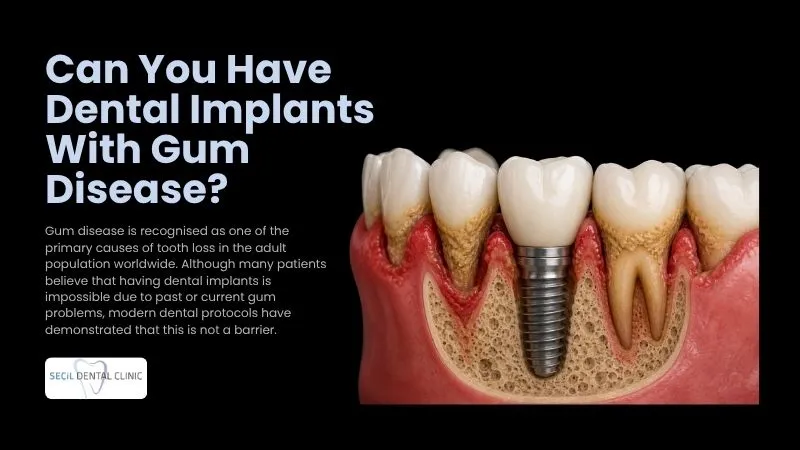
Healthy gums form the most important biological seal mechanism that extends the lifespan of the implant within the bone. As with natural teeth, the soft tissue surrounding the implants acts as a shield, preventing bacteria and food debris from penetrating deeper into the bone.
If the gums are weak or inflamed, this biological barrier is compromised, and a reversible yet risky inflammatory process known as peri-implant mucositis begins. A thick and healthy gum structure ensures the long-term stability of the implant and helps the patient maintain oral hygiene more comfortably. Scientific studies show that maintaining a healthy gum structure of 2–3 mm, referred to as the ‘biological width’, is of vital importance in preventing peri-implant diseases. (2)
Gum disease (periodontitis) is a chronic inflammatory process that is not limited to the soft tissues alone but attacks the supporting tissues and bone that hold the teeth in place. This infection, triggered by bacterial plaque, leads to the destruction of bone cells (osteoclastic activity) during the body’s immune response. Over time, both the height and width of the bone decrease; this results in the jawbone losing its density and undergoing ‘atrophy’.
As the success of an implant depends on the cellular bond it forms with the bone (osseointegration), this reduction in bone density jeopardises the solid foundation required for the implant. Therefore, prior to implant placement, the existing bone volume must be carefully assessed using 3D CBCT scans, and if necessary, bone grafting procedures must be performed to increase density.
Implant treatment yields highly successful results in individuals with a history of periodontitis; however, these patients are classified as a ‘high-risk' group. Scientific evidence indicates that implant survival rates are quite high in patients whose condition is under control and whose oral hygiene habits are well-established. (3) However, the risk of bone loss around the implant (peri-implantitis) is higher in periodontitis patients than in individuals with consistently good gum health. The key to success is the complete elimination of all infection foci in the mouth prior to implant placement.
The 10-year survival rates of implants placed after the disease has been successfully treated range between 90% and 95%. Some long-term cohort studies have shown that implant success in patients with chronic periodontitis is comparable to that in healthy individuals, although the success rate may be approximately 10–15% lower in cases of aggressive periodontitis. The key factor determining success is not so much the osseointegration of the implant as how well this integration is protected against bacterial attacks over the years.
One of the most significant factors in extending the lifespan of dental implants is the patient’s ability to adapt to lifestyle changes.
For patients with a history of periodontitis should undergo regular professional check-ups. During these check-ups, the dentist measures the gum pockets, assesses the bone level via X-rays, and removes hardened plaque (tartar) that has accumulated around the implant using specialised instruments. Regular maintenance allows any potential issues around the implant to be detected and treated while still in their early stages (the reversible phase). (4)
Yes, severe gum disease that has not been treated or brought under control is the most common cause of implant loss. Periodontopathogenic bacteria found in natural teeth can easily migrate to implant surfaces and infect the surrounding tissues. (5) This leads to peri-implantitis, causing resorption of the bone holding the implant, loosening of the implant.
All-on-4 Antalya is one of the most ideal and revolutionary solutions, particularly for patients with ‘terminal dentition’ who have lost all their teeth, often due to periodontitis. In this method, following the extraction of infected teeth and the cleaning of the site, fixed dentures can be fitted on the same day by placing four strategic implants in the areas where the jawbone is densest. Even in cases where bone volume is reduced, the angled placement of the posterior implants often eliminates the need for additional bone grafting, allowing patients to regain functional teeth quickly.
Make An Appointment Today With Our Online Form